Archive for December, 2010

Unveiled & the Victorian Reversal (giveaway!)

Sunday, December 26th, 2010

Do you remember the old Russian reversal jokes? You know, “In America, you find party. In Soviet Russia, party finds you!” Or: “In Soviet Russia, cold catches you!” And so forth.

In any event, I was trying to figure out yet another way to describe Unveiled for an upcoming blog post. Blah blah blah, I am so bad at telling people what my books are about! When I talk about Unveiled, I tend to say stupid things like, “this is a book about sexy, sexy bigamy!”

Not working so well. Or: “This is about this dude–and even though he is out for revenge he is totally cool–no, honest, I know it sounds like he’s vengeful, but he’s actually a total mensch, you know? He’s like…the Harlequin Presents mensch.”

And sometimes I sit down and spend half an hour constructing the following: “Margaret knows what all the rules are, and has followed every one… up until the point when she discovers that her father and mother weren’t really married, and she’s a bastard. By all the rules, she’s worth nothing.”

This, of course, is not even a description of the book; it’s a description of a tiny fraction of the events that happen before the book starts. Still, it leads me to the Best. Description. Ever. for Unveiled. Are you ready?

In America, you break rules. In Victorian England, rules break you!

Okay, fine. This still does not describe Unveiled, not at all, but hey, who cares? It’s fun!

So here’s the deal. You want to win a copy of Unveiled? Come up with a Victorian reversal. Post it in the comments below. One person will win randomly. One person who has the best reversal (as chosen by Mr. Milan, a sage and fair judge) will also win a copy. You can enter the skill portion as many times as you like, but you’ll only get one random entry per person.

This contest is open until the year 2011 hits the West Coast. ;)

Christmas Waffles

Saturday, December 25th, 2010

I have a recipe for multi-grain waffles that I’ve been working on perfecting for the last…oh, five years or so. I make these in massive batches and I freeze most of the results; in the mornings, I pop half a waffle in the toaster for an easy (and really delicious) breakfast. This recipe is what used to be a tripled recipe for someone else’s straight up white-flour waffles, but since I found that original recipe, I’ve basically modified it a thousand times.

At this point, it has evolved into a (mostly) forgiving recipe: a few blunders won’t kill you, and there are endless opportunities for substitutions without fear that you’ll ruin the whole thing.

Here’s my Christmas version of it (which I’m making now, while Mr. Milan sleeps).

dry ingredients

3 c whole wheat pastry flour
1/2 c buckwheat flour
1/2 c blue cornmeal
1/2 c brown rice flour
1/4 c yellow cornmeal
1/4 c garbanzo flour
1/4 c oat flour
1/2 t powdered stevia
1 t baking soda
1 1/2 t salt

A note: I’m giving actual amounts here, because I’ve found most people like getting recipes that have actual amounts. The only thing that is fixed in the above is the 3 cups of whole wheat pastry flour (is that ever important–you must use whole wheat pastry flour! I’m convinced the reason most people think that whole wheat is solid and chewy is that they use bread flour to try to make pastry items) and the baking soda (use baking soda, not baking powder!). Everything else is malleable.

For instance, you can use sugar instead of stevia. (Most people like waffles sweeter than I do, so I think you’d want about 1/3 cup sugar for regular person sweetness?) And the other flours are “for instance.” I like using a little oat flour every time, because it makes the batter sticky, and it makes the resultant waffle less likely to come apart in the iron. But if you don’t have somewhere where you can get cool flours, it’s perfectly fine to use 3 3/4 cup whole wheat pastry flour and 1 1/2 cup corn meal. Just about any combination of flours will work–but I try to keep it at 3 3/4 cups fine ground flour and 1 1/2 cup gritty flours for texture reasons.

Now we get to the fun part: Christmas seasoning! To the bowl above, add the following, freshly ground:  nutmeg, cinnamon, allspice, cardamom, juniper berry, black pepper.

I have a pepper grinder; everything else is done on the microplaner. I would tell you how much I add, but I don’t really measure as I go. A few gratings of nutmeg. About half a cinnamon stick. A berry of allspice, cardamom, and juniper. A few grinds of the pepper grinder. Be careful not to overdo it on the nutmeg–it can be a very overpowering spice. You can add a little clove powder if you want, but it’s even more dangerous than nutmeg: too much completely ruins the batch, and you can’t have too little.

You can do just about anything (within reason) for the seasoning. One of my favorites is the zest of 3 limes–simple and delicious. Or think about just plain vanilla (if you’re doing this, either add the extract to the wet ingredients, or if you’re using a vanilla bean–and why wouldn’t you?–put 1 c of the buttermilk into a pan and scrape the seeds into it, and then simmer with the bean in the mix. Remove bean before adding back to wet mixture). You can also add heftier ingredients: pecans and cranberries, or chocolate chips and slivered almonds. But if you do that you should be sure to increase the liquid slightly below. And no, I don’t know how much “slightly” is–just pour a little more in, okay?

Mix the dry ingredients together and set them on the side. Now is a good time to turn the waffle iron on.

In a separate bowl, mix:

1 quart buttermilk
1 1/2 c canola oil
6 egg yolks (put the whites in the largest bowl you have).

Set this bowl of wet ingredients to the side of the dry ingredients. A note on the eggs: there are only a few non-forgiving portions of this recipe. One is the whole wheat pastry flour (pastry flour: don’t forget that!). The other is the eggs. This recipe is highly dependent on the eggs for loft. So use really, really good eggs. I mean it! The other thing is the buttermilk. You do have to use buttermilk–otherwise the baking soda won’t activate. If you really, really can’t use buttermilk, I guess you can make do with regular milk and a little vinegar, but it just won’t be the same.

Another note on oils: I use canola oil. I’ve done just enough experimenting with olive oil to know that the batch comes out way too oily if you use 1 1/2 c. I think olive oil is just too heavy over all to be used here, but I suspect that the usual suspects used in baking are just fine.

All righty. Now take your egg whites and beat them until they form stiff peaks. I like to do this by hand. And before you freak out–if you have really, really good eggs, it actually doesn’t take that long for the eggs to get peaky, and you can feel the eggs get to that stage of ultimate perfection. Combine the buttermilk/oil/egg yolk mixture with the dry ingredients, and then fold the combination into the egg yolks.

Voila! Your batter is done. Now you need to cook it in a waffle iron. I use a 1/3 cup measure to dollop it in, and leave a little room around the edges for the waffle to expand.

The one danger of this recipe is that if you open the waffle iron before the waffle is cooked through, the waffle will split–even with a supposedly non-stick iron–and that makes a mess and isn’t fun for anyone. A second danger is that if you have a waffle iron that beeps when the waffles are supposedly done, it judges “doneness” very poorly with this recipe (and other whole wheat recipes). You can tell when the waffle is done by the amount of steam that comes from the iron: too much, and it’s not still cooking; wait until you have only a few curls of steam.

It helps to have a very, very hot iron: most waffle irons will tell you they’re ready to be used when they could stand to heat up for another few minutes.

Enjoy!

Corsets

Tuesday, December 21st, 2010

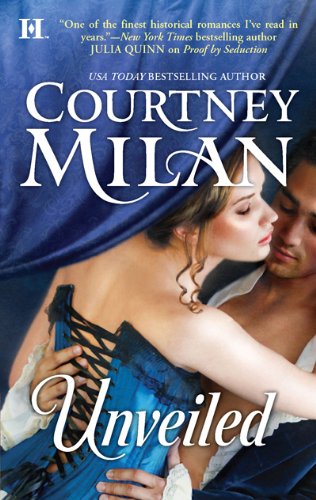
unveiled coverThis is a short post about something kind of cool.

Don’t you love the corset that Margaret is wearing on the cover of Unveiled?

Well, the maker of the corset tweeted about it! It’s a Gabrielle corset, from Starkers! corsetry in Toronto, Ontario, in a peacock blue satin.

How cool is that?

How to Run a Website Contest (without going to jail)

Monday, December 20th, 2010

More than a year ago, I wrote an article for the RWR (That’s the Romance Writers Report–RWA’s formal magazine) about the legality of website contests. When I was blogging for the release of my last book, I noticed that some bloggers were attaching conditions to my giveaway of my book–conditions that they did not run past me, and that I did not agree to. Some of those conditions made the giveaway illegal. All of those conditions annoyed the heck out of me.

More recently, some discussion has cropped up about whether bloggers are running illegal website contests, and so I thought it would be timely to post my RWR article. It doesn’t address the complaints of rigged giveaways–honestly, I thought it went without saying that if you say you’re going to give a prize to one randomly drawn commenter, you have to freaking give the prize to a random commenter! But the article does talk about the contours of the law. A little.

Be advised that it’s an attempt to be light-hearted, that it was written for an audience of romance writers–and that it was more tailored to address specific circumstances than it was to provide a full and complete background of the law of contests.

You’ve seen this situation a thousand times before.  Author Jane Promoter, eager to start some online buzz about her novel, announces an exciting contest on her website:  Buy her book, send her the receipt, and you’ll be entered into a drawing to win a box of chocolates.

Jane knows that the release of a book is a make-or-break event, and she’s determined to make it in the world of publishing.  A contest is a good idea . . . or it would be, except that by virtue of her little promotional contest, featuring a $20 box of chocolates, she’s now guilty of a misdemeanor offense in California, New Mexico, Rhode Island, and a multitude of other states, punishable by up to two years in prison.

Website contests are wonderful promotional tools. They have been used as wonderful promotional tools ever since the first Australopithecus advertised her skill in making flints by painting on cave walls.  But because contests are so effective at drawing people in, they have been regulated ever since the second Australopithecus came up with a scheme that conveniently required every entrant to give him the carcass of a woolly mammoth.

Since the time of the Australopithecines, there has been a bit of modernization on the contest front.  We have access to fire, paper, printing presses that utilize movable type, and the Internet.  Sadly, law enforcement officials have access to these same things, too, and they’re tasked with the difficult job of enforcing the law.

What this article covers

If you’ve ever read the fine print for contests run by major corporations, you’ll notice that the contest rules contain exceptions and clauses stating “void where prohibited” and “cannot be redeemed in Azerbaijan” and “no cash value.”  This is because a contest, even one that is situated in one state, must abide by the rules and regulations of every state, territory, or country in which participants are solicited.  The law of contests and raffles fills entire treatises.

Not only is the law on this subject voluminous, the law changes.  Legislatures rewrite portions, especially as it applies to the internet.  There is only way you can be 100% certain that your website contest is completely kosher, and it is to hire a good lawyer, who will survey the law in existence at the time of your contest, and who will examine the specific facts of your situation.

Needless to say, if all you want to do is give away copies of your book on the Internet, the prospect of hiring a lawyer to perform hours of legal research is probably outside your budget.

This article discusses the black areas and the gray areas in contests.  It tells you the one contest you (or your RWA chapter) should absolutely never run (hint: it’s a raffle), and the contest you should probably never have (hint: you require people to purchase your book).  It provides a few useful guidelines for your website contest.

What this article can’t do is provide you with absolute certainty that you are operating within the bounds of the law.  For that, you need a lawyer.

A note about jurisdiction

When discussing website contests, you might wonder, “Why do I care about the laws of all 50 states?”
The answer to that is called, in legal terminology, long-arm jurisdiction.  As a general rule, if you rob a bank in Montana, the state of Rhode Island cannot prosecute you for it.  That’s because Rhode Island only has the power to protect against activities that happen within its boundaries.  Legally, one would say that Rhode Island lacked jurisdiction.

You might imagine that in order for a state to have jurisdiction over a person, you would need to live in the state.  But suppose you live in Montana, and you hack into a bank in Rhode Island.  Even though you were situated in Montana, the act you took had an immediate, obvious, and foreseeable effect in Rhode Island, and Rhode Island can assuredly prosecute you.  It is not always easy to tell when your activities open you up to a state’s jurisdiction; the Supreme Court has stated that a state may have jurisdiction over you based on a test that balances “the quality and nature of the activity in relation to the fair and orderly administration of the laws.”  In other words, you can be prosecuted by a state so long as you have “minimum contacts” with that state.

How does this apply to website contests?  Many states have what are known as general long-arm statutes.  Long-arm statutes are exactly what they sound like: they are statutes that reach a long arm outside of the state, and provide that people who violate the laws of the state, and have the “minimum contacts” required by law, can be subjected to the laws of the state.

How does it matter? If you hold a contest in Montana, and you forward the announcement to a chapter in Alabama, you are effectively soliciting entries from Alabama.  Now, Alabama does not just prohibit gambling; it also prohibits promotion of gambling, which includes advertising and profiting from gambling.

Alabama not only has a general long-arm statute; its laws state: “It is no defense . . . that the lottery itself is drawn or conducted outside Alabama and is not in violation of the laws of the jurisdiction in which it is drawn or conducted.”  In other words, if you run a lottery, and you solicit entries from Alabama, you might be in violation of the laws of Alabama—and they reserve the right to come after you.

The precise boundaries of personal jurisdiction, in the days of the World Wide Web, are still up for debate.  The Supreme Court is still shaping the doctrines at issue here, and states (and other countries) themselves are experimenting with enforcement of laws that apply to entities outside their territory.
If you want to become a test case for the exciting litigation in this area, you should feel free to experiment.  If you do so, you might someday have the enthralling prospect of paying for an attorney to represent you in front of the Supreme Court.  Law students everywhere will curse your name as they struggle to understand the implications of the precedent you set.

If shelling out hundreds of thousands of dollars in attorneys’ fees doesn’t sound like fun, this article is for you.

The Black Area

While the law of contests varies substantially from state to state, there is one thing that even a cursory examination of the law reveals: Raffles and lotteries are highly regulated, and mostly banned.  You should probably not run one unless you have consulted a lawyer in depth, and my best guess is you should not run one at all.

Raffles or lotteries are games where someone sells tickets for money or something else of value, in exchange for a prize that is distributed by chance.  It does not matter if that chance is a random drawing or a game of Bingo or the culmination of a vingt-et-un tournament.  If you are collecting money and offering a prize that is distributed based on chance rather than skill, you are running a raffle or a lottery. These activities are regulated because they are a form of gambling: They entice people to give up money in exchange for a chance to win.

When raffles or lotteries are conducted online by RWA members, they are for a good cause.  The beneficiary of such a contest is an RWA chapter, or an author who has fallen on hard times due to unforeseen medical bills.  You might think it is okay to hold a raffle if it is for a good cause.
In a few states, you might be right.  In the rest of them?  Not so much.

Every state has specific rules about what counts as a “good cause.” In just about every state, the only private organizations that are allowed to apply are registered nonprofits.

An individual simply cannot raise money for a friend via a raffle.  That is illegal in just about every state, almost certainly including the one you live in.

Even if you are affiliated with a registered nonprofit (for instance, RWA chapters are nonprofit organizations), the requirements for running a raffle are usually quite stringent.  For instance, California states: “An eligible organization may not conduct a raffle authorized under this section, unless it registers annually with the department of Justice.”  Furthermore, California also states that “[i]n no event shall
funds raised by raffles conducted pursuant to this section be used to fund any beneficial, charitable, or other purpose outside of California.”  New Mexico requires raffle-holders to obtain a license from the state and to pay a tax on three percent of the proceeds. It will only license an organization “which has been in existence in New Mexico continuously for a period of three years immediately.”

These are the laws of just two states, and I think if you put them together, you’ll see why online lotteries are such a conundrum.  A lottery is only legal in California if the funds raised do not benefit a purpose “outside of California.”  New Mexico only license organizations which have existed in New Mexico continuously for three years.

As far as I can tell, the only way that an RWA chapter could meet both these requirements with an Internet lottery would be if the New Mexico chapter of RWA held a lottery to benefit California romance writers.  All you need to do is add in one more state and you’ll see that it is simply impossible to run a nationwide raffle that satisfies all state laws.

This means, if you are running a raffle over the Internet, and soliciting entries from chapters throughout the United States, your raffle is very likely illegal.

There may be ways to legally run an internet raffle.  But if your organization hasn’t talked to a lawyer who is familiar with the hazardous law of lotteries, it is almost a given that your raffle is illegal.  If you or your RWA chapter are raising thousands of dollars on a raffle conducted on the Internet, you need to stop reading this article and start talking to a lawyer.

The Gray Area

You’ve probably seen a thousand commercials for contests run by corporations, in which the announcer at the end states that “no purchase is necessary.”  Most states require that contests allow all members of the public to enter, even if they have not made a purchase.

If you hold a contest in which the method of entry is to provide a receipt for a book that the person has purchased, you have entered a gray area.

You can probably stay legal by providing an alternate form of entry—one that does not require a purchase—but if you do, you must make sure that you state the alternate form of entry clearly and plainly, so that anyone who learns of your contest can find out about it, and can enter as easily via the free method as they would be able to enter if making a purchase.

If people can e-mail you a receipt from Amazon to show they purchased your book, you must allow them to e-mail you a free ticket to enter.  You almost certainly cannot allow e-mailed entries of receipts, but require that free entries be sent via US Postal mail.

Contests that require receipts for entry (even if you have an alternate method for entering) are gray areas.  They are not safe.  If you have any doubt about a website contest that requires a receipt for entry—and if you are running such a contest, you should likely entertain such doubts—you should either consult a lawyer or change your contest.

Areas that are probably white

If you do not require people to give up money for a chance or to make a purchase, your website contest is… I hesitate to use the word “legal,” but it is probably not going to be subject to scrutiny.

Here’s the unfortunate truth: If you live in Rhode Island, and you are giving away a book from your backlist, your prize is worth perhaps $6.99 (unless you look at the used price on Amazon, in which case the value is more like $0.02).  Even if your contest violated New Jersey law, how likely is it that a prosecutor from New Jersey will care about your illegal contest?

For the same reason that prosecutors would (usually) not go after a group of friends betting on the outcome of a sports event, even if that conduct constituted illegal gambling, they are unlikely to pursue your website contest.  Let us face it—New Jersey has more hardened criminals to deal with than renegade authors who willfully give books away to fans on the Internet.

I care profoundly about legal ethics and the rule of law, and so even if your $6.99 giveaway will never be subject to state scrutiny, I must say that you should never, ever break the law, not even a little.  No, you may not even jay walk across the street to buy my book (but if by chance you do, please buy two).

Unfortunately, given the frequent changes in the law, the accessibility of website contests around the world, and my inability to speak languages other than English well enough to decode worldwide laws, I can’t tell you for sure how to create a website contest that abides by all laws.

But there are a few things that I found in common.  If you want to be really, really safe, here are a few things you can do to increase your sense of security:

  1. Limit participation to US Residents.  The laws of other countries are too diverse and too different from the United States, and there is simply no way to make sure that you are interacting with jurisdictions that allow your contest.

Many contests run by corporations deal with this problem by use of the following fine print:  “Void where prohibited.”  It’s a good idea, and one you might consider adopting, but it also means that you need to know where your contest is prohibited, so that if a person from Thailand is drawn as the winner to your contest, you’ll need to find out if she’s allowed to enter.
  2. Provide the odds of winning.  Many states require that you clearly state the odds of winning.  If you are awarding a prize to every 20th commenter on your blog, you would need to state: “The odds of winning are 5%.”  If you are giving away one copy of your book to a blog commenter, state “The odds of winning depend upon the number of participants.”
  3. State what the prize is up front. Don’t say, “It’s a very good prize” or “it’s a surprise grab bag of really cool things.”  Do say, “The prize is a copy of Proof by Seduction, my latest release” or “You can win a $25 gift certificate to your choice of Borders or Barnes and Noble.”
  4. Don’t make it onerous to enter. If you state that valid entries must send you the name of the French maid employed by the Duchess of Whatsit (material that only appears in chapter 21), you could fall in to the gray area above, because you might be (indirectly) requiring a purchase of your book.  True, a person might be able to find the answer by borrowing the book from the library.  But you’ve now made it much, much easier for someone who owns the book to answer the question than someone who doesn’t, and that could run afoul of state laws requiring that non-purchasers be able to enter the contest as easily as purchasers.  Do ask readers to find the answer to your question in an excerpt provided on your site.

None of these things can guarantee that your contest entry will be legal—only a lawyer can do that.  But if you follow these guidelines, and make a good-faith effort to adhere to the laws, chances are that you will be safe.

Fairytales of meritocracy

Wednesday, December 15th, 2010

The words “historical accuracy” do not mean the same things to all people. This is, in large part, because readers read historical fiction for different reasons.

More after the jump.

(more…)

Things I shouldn’t say

Monday, December 13th, 2010

To the extent that I have a reputation in the online community of authors and readers, I’ve staked it on trying to speak clearly, intelligently, and correctly about things that I know about. I may not always succeed, but I always make the effort.

This is particularly true when it comes to legal matters. That’s why I post about the First Amendment, the Google Book Settlement, and the legality of text to speech on Amazon’s Kindle. It’s also why I post about annulment and debtor’s prison. Even if I think I know something cold, I don’t post anything legal without checking and double-checking the law first–even if I am posting a one-off comment on Dear Author.

While people may not always agree with my legal analysis, I want them to trust that I can back up what I say with solid, intelligent arguments. I want you to be able to trust that when I comment on Dear Author historical first pages saying, “this is legally possible” or “this is legally not possible,” that I’ve thought it out and looked it up and can provide pages of citation, if necessary. In fact, I will often provide them before I’m asked.

I don’t say anything about legalities without checking that I am right, and for good reason. My reputation on this question really, really matters to me–both because of what I say online, and because I write books that sometimes have legally intricate subplots.

At its heart, Unveiled, my upcoming February release, is about the interaction between two families: the Dalrymples, the children of the current Duke of Parford. They were declared bastards when the marriage that produced them was found to be bigamous. Then there’s the Turners, distant cousins who stand to inherit when the duke dies.

The Dalrymples aren’t taking this lying down, though: they’ve asked Parliament to legitimize them and restore their inheritance. This pending bill is a big part of what pits Ash Turner, my hero, against Margaret Dalrymple, the heroine.

I’ll stake my reputation as an author on the validity of that legal arrangement: the bastardization, and the ability of Parliament to legitimize bastards and restore their inheritance.

The correct statement of the law on legitimized bastards is this:

Where a person is admittedly a bastard by birth, there is no way, generally speaking, in which he can be made legitimate, except by Act of Parliament.

The Laws of England.

That exception–that you can become legitimate and inherit by Act of Parliament–is what Unveiled depends on. The disinherited Dalrymples are not seeking legitimation through ecclesiastical decree. They’re not relying on some technicality in canon law. They’re going directly to Parliament and saying, “We will not be able to inherit unless you pass a law that says we can.”

I know Parliament can do this for two reasons. First, and most generally, the doctrine of parliamentary sovereignty says that Parliament can make or unmake any law it wishes. The only thing it can’t do is bind future Parliaments. So if there’s a law that says that bastards can’t inherit, Parliament can undo that law.

Second, we know that this can happen specifically because bastard children have in fact inherited by Act of Parliament. For instance, Parliament legitimized the children of John of Gaunt, Duke of Lancester, allowing them to inherit from their father everything except the possibility of succession to the throne. Parliament also legitimized the children of Sir Ralph Sadler, whose wife was a bigamist (she believed her first husband was dead), and stated that their children “shall att all tymes hereafter for ever be had, reputed, taken, esteemed and adjudged legitimate and lawful children begotten of the body of ye said Ralph Sadler, and shall be inheritable as well to the same Ralph Sadler…to all intents, constructions, and purposes, as they hadde been ingendered, begotten, and borne, in lawful, perfect, and indissolvable matrimony.” You can read the entire text of that Act here.

I modeled the putative Act of Legitimation in Unveiled after the real-life Act passed for the benefit of Ralph Sadler’s children.

For a more comprehensive discussion, footnote (g) on this page of The Laws of England collects cases of legitimation by Act of Parliament, including a discussion on the particularities of inheriting through such legitimation.

So if you are wondering, for any reason, whether the arrangement in Unveiled is valid…it is. I research these things very thoroughly. If you ever have questions about the validity of any of the legalities I mention in my book, please e-mail me and I will be delighted to share with you the reams of research on the subject. And, lesson learned: next time, include an author’s note. Just in case.

I’m not allowing comments to this entry, not because I want to squelch discussion, but because I don’t want to tempt myself to say any more than I have.

That tells you that this is a more passive-aggressive post than it really should be–and I wouldn’t have said any of this if I didn’t think that this reflected not only on Unveiled itself, but on the character and reputation that I have painstakingly tried to establish.

Sexy historical legal talk: Impotence!

Thursday, December 9th, 2010

I am in a happy place, because I finished a book! This is exciting, and so I’m going to talk about something even more exciting: impotence. This is because it has come up on at least four occasions within the last day–most recently, in this blog on All About Romance’s site, where Jane Granville makes the comment that “all of us can think of at least one book where the heroine got an annulment based on non-consummation (whether this is legally legitimate is up for debate).”

I suppose the question of annulment for non-consummation is up for debate, in the same way that the question of whether cats are reptiles is up for debate: you can have lengthy discussions about things that are questions of fact, and people can, in fact, disagree. But this isn’t a disagreement about whether vanilla ice cream is better than chocolate ice cream. It’s a disagreement where one person is right, and the other is wrong.

So, let’s settle this debate once and for all.

Nonconsummation, in and of itself, was never grounds for annulment. It was, however, a necessary (but not sufficient) component of seeking an annulment on grounds of impotence. And, here’s the kicker–today, when we think of “impotence,” we tend to think of it as a strictly medical condition that deals with the question of whether the man is capable of getting it up and using it, but what was meant by impotence back then doesn’t track modern meaning. A few things to consider:

  • A man was not considered impotent, for purposes of annulling a marriage, if he could get it up and use it, even if he was unable to get to his happy ending.
  • You could be considered impotent with respect to a spouse even if you were capable of having intercourse with others.
  • A woman could be considered impotent if she had a violent hysterical reaction every time her husband tried to have sex with her, so that the only way to proceed would be to use physical force. But mere resistance (or, as they so lovingly called it back then, “frigidity”) on the part of the woman is not enough: it has to be an involuntary response.

So how does this play out? If you want to get an annulment on grounds of impotence, you are going to have to prove that you are impotent. You can do this a couple of ways. First, you can submit to medical evaluation. But remember that you can claim that are impotent with respect to a particular spouse–how on earth would you prove that to a doctor?

Well, this is where nonconsummation finally becomes an interesting question. Up until this point, nonconsummation would have been proof that the parties in question were not impotent. But the rule was that if the medical evidence was inconclusive, the courts would require the spouses to cohabit for three years. If they were able to do so without consummating the marriage, the court would presume that the couple was incapable of having sex, and they would annul it.

So nonconsummation, in and of itself, can be a grounds for annulling a marriage. But it has to be nonconsummation for three years of cohabitation–something that no romance couple has ever managed to accomplish.

The clearly readable A Handbook of Husband and Wife lays all this out, including a discussion on how these rules would vary in Scotland. For those who might get annoyed that this is technically a book about Scottish law (even though the author talks about England and Scotland), the same rule is discussed (in less clear terms) in A Practical Treatise on the Law of Marriage and Divorce, which is all about England.

So you want a marriage to be annulled for impotence? You need to live together for three years. And not just be married for three years, but generally live in the same place.


Courtney Milan’s Blog is proudly powered by WordPress
entries (RSS) and comments (RSS).
content © Courtney Milan, 2006-2009
author photo © Jovanka Novakovic | bauwerks.com
cover copyright © 2010 harlequin enterprises limited
cover art used by arrangement with harlequin enterprises limited. all rights reserved.
® and ™ are trademarks of harlequin enterprises limited and/or its affiliated companies, used under license
home \"home books \"books about \"about contact \"contact faqs \"faq articles \"articles